Beginning Post on Options
So many different strategies you do with options, we'll cover them all!
Introduction:
With options you can
Reduce or increase the risk of your portfolio
Enhance an existing stock portfolio
Learn different options strategies by doing them
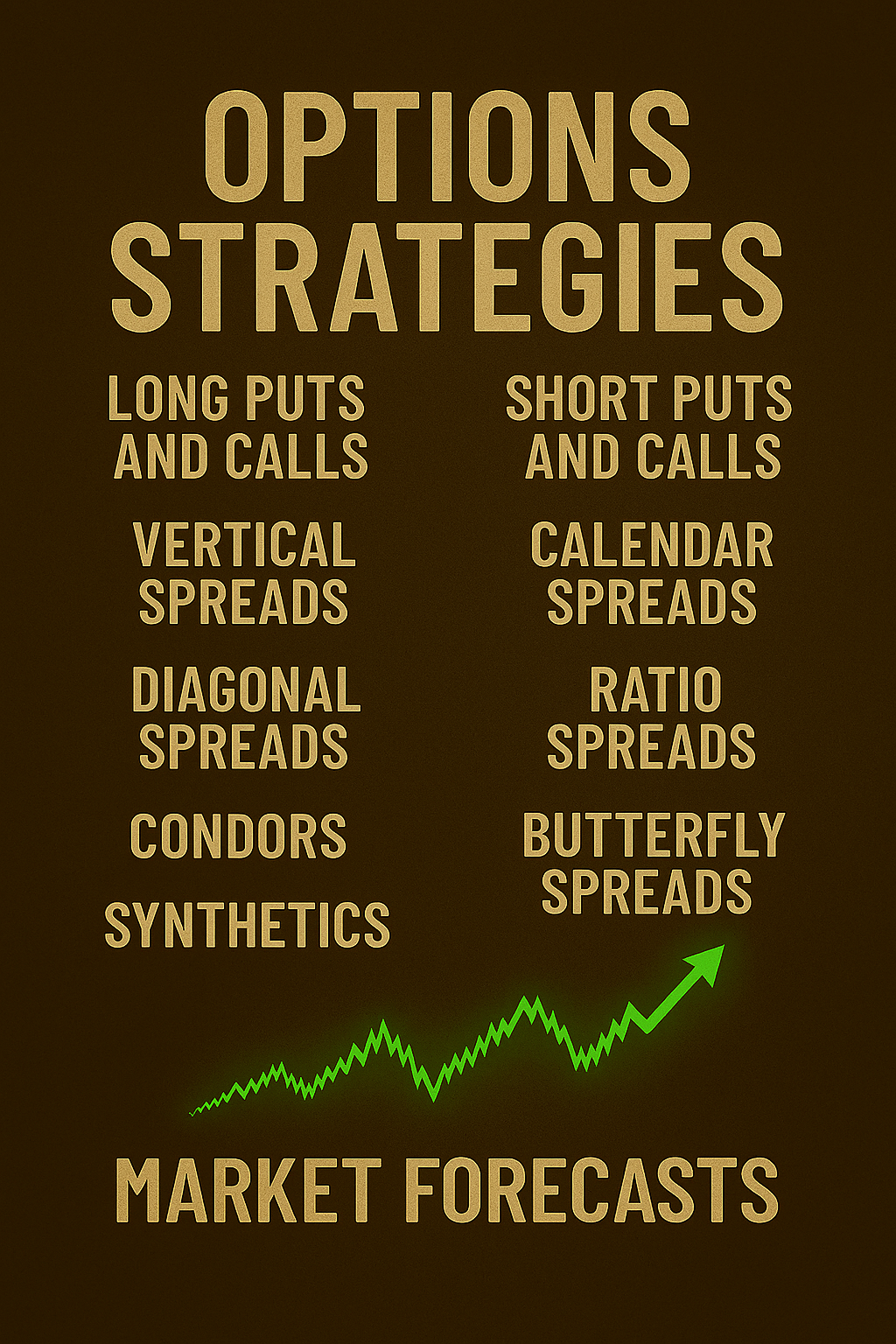
1. Option Basics
If you are just getting started learn exactly what options are and how they are used
2. Long Puts and Calls
If you have a good idea of where the stock or stock market is going just purchases a call for an expected increase or a put for an expected decrease might be your best choice. But which expiration do you choose and why?
3. Short Puts and Calls
Bring in regular income! selling a call on a stock that you own can be a great way to bring in more income than just holding the stock. Which strike price and expiration should you choose and why? Should you let your stock get called away? or not? and why? Sell puts to bring in more income. What stocks should you choose sell against? What strike and expiration should you use and why? Should you let yourself be assigned? Should you ever sell an uncovered call?
4. Vertical Spreads
A Vertical Spread is created by buying and selling two similar options on the same underlying security at the same time. There are four different Vertical Spreads; Bull Put, Bull Call, Bear Put and Bear Call. As their names imply two of them are bearish and two of them are bullish. Two of them use calls and two of them use puts. Two of them are credit spreads meaning that the options contract that is sold has a higher premium than the option contract that is purchased. So, the difference between the two is a net credit. Two of them are debit spreads meaning that the options contract this is sold has a lower premium than the options contract that is purchased. So, the difference the between the two is a net debit. What strike prices should you use? What are the best situations in which to use a spread? Lets talk.
5. Calendar Spreads
You create a Calendar Spread by selling and buying the same strike at different time frames. If you sell the shorter time to expiration and purchase the longer time to expiration you have a net debit. This being long the Calendar Spread. If you purchase the shorter time frame and sell the longer time frame you have a net credit. This is referred to as being short the calendar spread. The short leg would considered a naked or uncovered short position for margin purposes. Calendar spreads can be created by using ether calls or puts but not one of each. One of each would create a Synthetic, don't worry we'll get to those. So many ways use Calendar Spreads. The most common is when you think the underlying security won't move very far.
6. Diagonal Spreads
Similar to calendar spreads in that you are using two different expirations, and you are buying one and selling the other. Again, you can use either puts or calls. But most other ways they are different. A calendar spread has a symmetrical payoff profile. A Diagonal Spread has a non-symmetrical payoff profile. One direction of movement by the underlying is greatly preferred other the other. A debit or a credit and covered or uncovered are also more complicated. How to calculate this and why you would use this strategy or not will be covered.
7. Condor Spreads
One of the most popular spreads are Condor Spreads. Four different strike prices are used. Two strike prices are below the current level of the underlying security or at least where you think the underlying will be at expiration. Two of the strikes are above the current level or the underlying or at least where you think it will be. You can use all calls, or all puts, or two of each. You could think of a condor as two vertical spreads used together. If one the spreads are done using puts and the other done using calls this is commonly referred to as an Iron Condor. Just as with the other spreads and uses of options how you apply a Condor and when you use a condor are essential to your success with Condors.
8. Butterfly Spreads
Similar to Condor Spreads in that you use could use two vertical spreads to create it. Different in that you only use three strike prices. One lower strike, one higher strike and one in-between the two that is done twice. Again, as with the Condor Spread you could use all calls, all puts, or one call spread and one put spread. In any way you construct a Butterfly Spread all calls all puts or both calls and puts the strike price in the middle of the high and low strikes will always be short twice and the high and low strikes will always be long. Butterfly's can offer a tremendous reward to risk ratio.
9. Ratio Spreads
As its name implies you have a spread in that you are buying and selling similar options of the same security. Also, as its name implies you are NOT by and selling in a one to ratio. You are trading different quantities of either the long or the short leg of the vertical. Ratio spreads are very situational. You would typically use them when you think a large move might happen? But you are very unsure. The ratio spread can allow you to make a huge profit if you are correct but lose less if you are wrong.
10. Synthetics
Using a combination of puts, calls and stock either long or short for any of those three building blocks. Think of the Put Call Parity, Call = Stock + Put (I've omitted the bond component for simplicity). This is mostly useful if either the call or the put is mispriced. It is possible to take advantage of the mispricing if it lasts long enough and the stock is liquid enough.
11. Market Forecasts
On a regular basis I will give an opinion of stock market direction based on News, Expected News, Political Events, Economic Releases, Fundamental Analysis and Technical Analysis


